
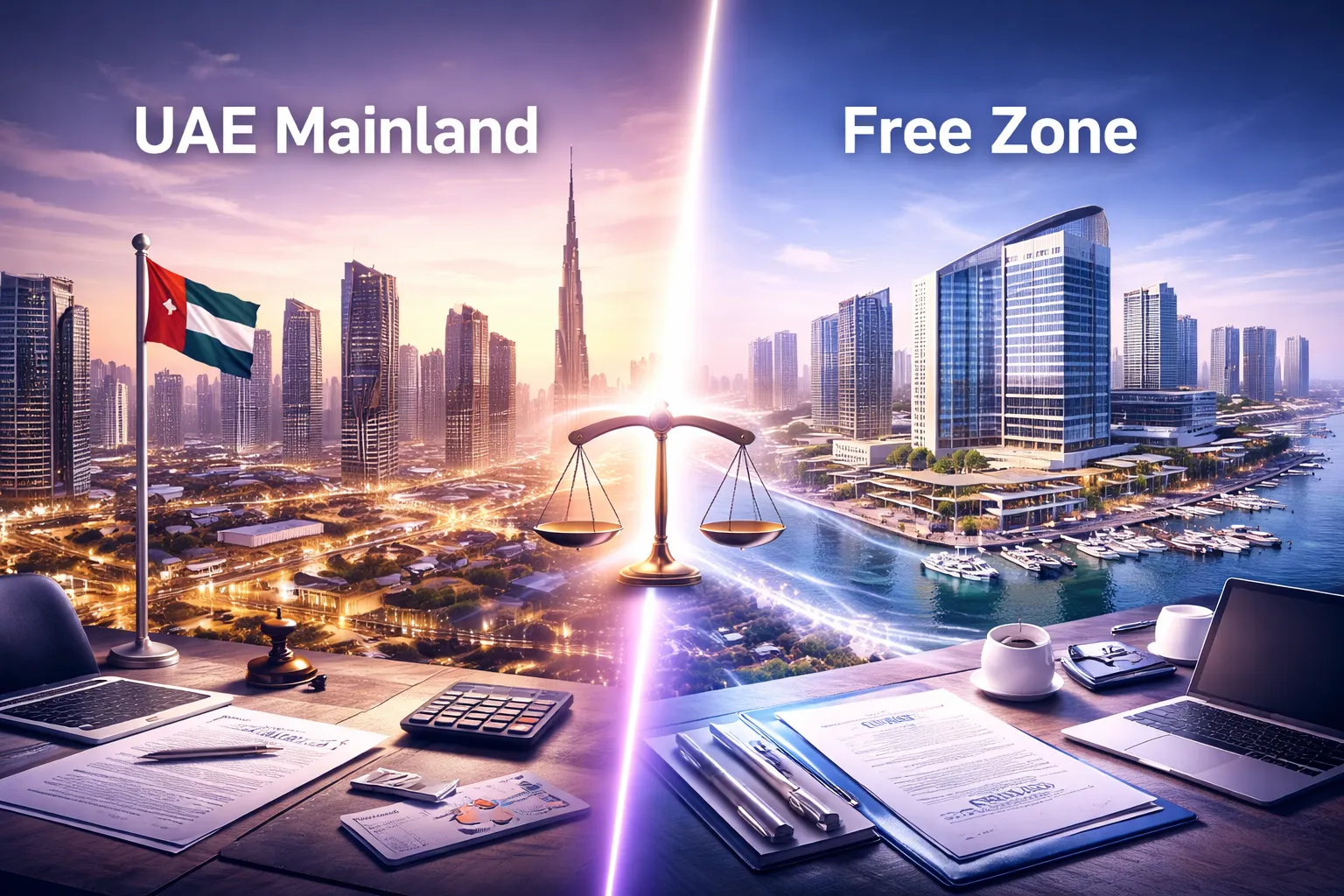

The United Arab Emirates remains one of the most attractive jurisdictions globally for entrepreneurs, investors, and multinational companies. However, one of the first and most critical decisions when establishing a business is choosing between a Mainland company and a Free Zone company.
Each structure operates under a different regulatory framework and offers distinct operational advantages. Understanding these differences is essential before proceeding with company formation in the UAE.
What Is a Mainland Company in the UAE?
A Mainland company is licensed by the Department of Economic Development (DED) of the respective emirate. This structure allows businesses to operate across the UAE market without geographic restrictions.
Key Characteristics of Mainland Companies
-
Ability to trade directly within the UAE market
-
Eligibility to work on government contracts
-
No restrictions on office location within the emirate
-
Broader flexibility in commercial activities
Mainland structures are typically suitable for businesses targeting the local UAE market or engaging with government entities.
What Is a Free Zone Company?
A Free Zone company is established within a designated economic zone regulated by its own Free Zone Authority. The UAE hosts more than 40 Free Zones across various emirates, many of which are sector-focused.
Key Characteristics of Free Zone Companies
-
100% foreign ownership
-
Simplified incorporation procedures
-
Industry-specific licensing frameworks
-
Customs and trade facilitation within designated zones
Free Zone structures are often appropriate for consulting firms, international trading companies, digital businesses, and regional headquarters operations.
Mainland vs Free Zone: Key Differences
1. Market Access
Mainland companies can operate freely across the UAE and conduct business directly within the local market.
Free Zone companies may require a local distributor or additional permissions to trade directly within the UAE mainland.
2. Regulatory Authority
Mainland entities are regulated by the Department of Economic Development of the respective emirate.
Free Zone entities are governed by their individual Free Zone Authority.
3. Office Requirements
Mainland companies must lease a registered physical office within the emirate.
Free Zones may offer flexi-desk, shared office, or warehouse options depending on the license type.
4. Business Activities
Certain regulated activities may require additional ministry or authority approvals under both structures.
The appropriate choice depends heavily on accurate activity classification at the formation stage.
How to Choose the Right Structure
There is no universal solution. The optimal structure depends on:
-
Target market (local, regional, or international)
-
Nature of business activity
-
Regulatory approval requirements
-
Staffing and visa needs
-
Long-term expansion strategy
A structured assessment of these factors ensures alignment between your business objectives and regulatory framework.
Regulatory Considerations in 2026
UAE regulations continue to evolve in alignment with economic diversification strategies and compliance standards. Businesses must ensure:
-
Proper activity classification
-
Accurate documentation submission
-
Compliance with federal and local authority requirements
-
Sector-specific regulatory approvals where applicable
Misclassification or incomplete documentation during formation can lead to operational restrictions or restructuring requirements later.
How Al Murooj Supports Company Formation
Al Murooj Corporate Services provides structured coordination for both Mainland and Free Zone company formation across the UAE.
Our services include:
-
Activity assessment and classification
-
Authority coordination and submission management
-
Documentation preparation and processing
-
Regulatory compliance review
-
Ongoing post-licensing support
Our approach ensures that incorporation is handled accurately, efficiently, and in alignment with applicable regulatory frameworks.
Conclusion
Choosing between Mainland and Free Zone company formation is a strategic decision that influences operational flexibility, regulatory obligations, and long-term scalability.
A clear understanding of these structures ensures smoother establishment and sustainable business operations within the UAE.
For structured guidance on selecting the appropriate formation route, Al Murooj Corporate Services provides professional coordination across all relevant authorities.